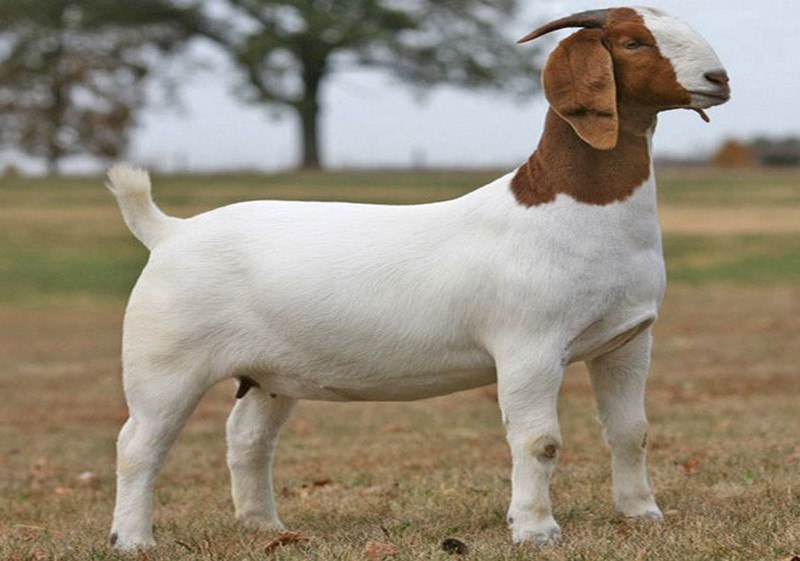
The Boer Goat, as a South African land race, has been phenomenally successful as a registered small stock breed. Thanks to dedicated producers here in its home country who have rigorously applied selective breeding practices over almost a century, the Boer Goat is now found in almost every country across the world. It is here in South Africa where the very best genetics in the world are sourced and where breed standards are determined.
The first mention of South Africa’s goat dates back to nine years after the Dutch established a settlement at the Cape in 1652. An expedition was sent out on 30 January 1661 to explore the inland.It was reported that they rested in the vicinity of the Olifants River where the Namaqua prince presented them with a goat obtained from a bantu tribe called Briqua, i.e., “goat people”/
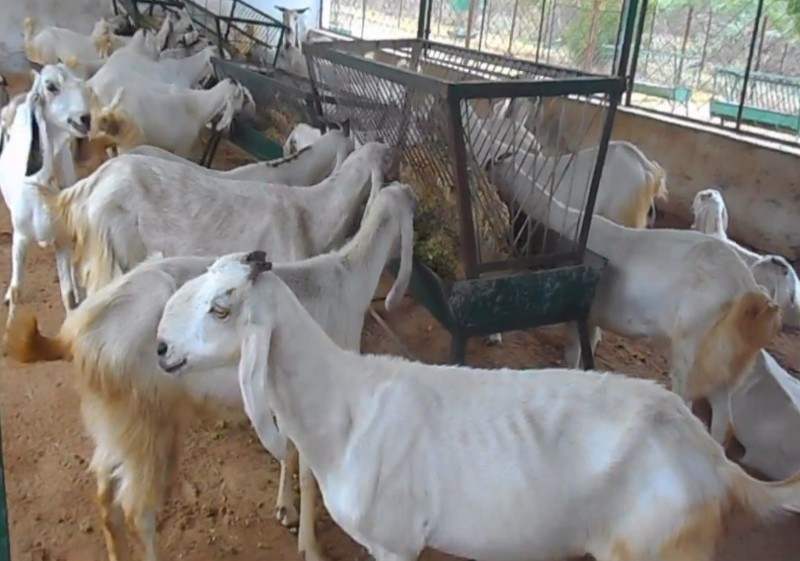
According to other explorers the goat in South Africa corresponded with the Nubian or Egyptian goat. Wallace reported in 1896 “that a small herd of milch goats and a huge number of goats are kept at Groot Constantia for manure for fertilizing the vineyards”.During 1898 the Cape Agricultural Department imported three Saanen males and twelve females, probably from Switzerland. The South African Milch Goat Association was founded in 1926 and affiliated to both the then SA Stud Book Association and British Goat Society.
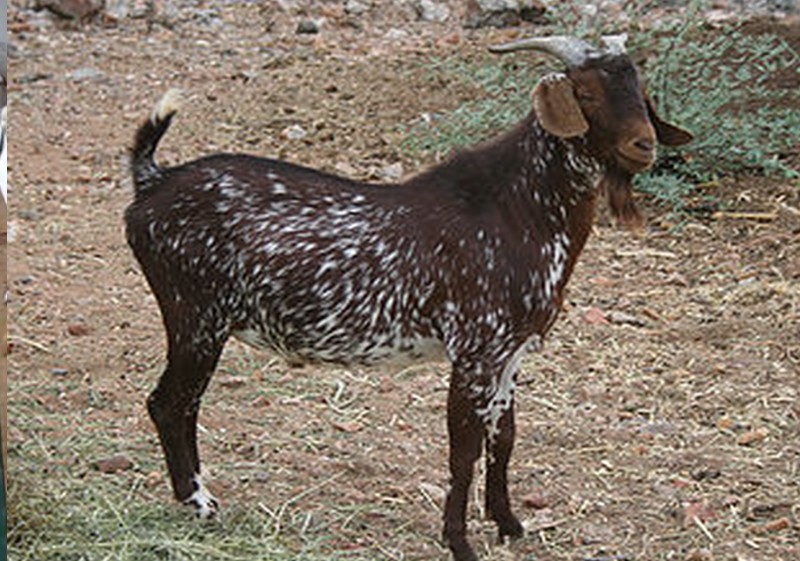
Tankwa goats are feral animals initially identified from the Tankwa Karoo National Park in the Northern Cape, South Africa that is reported to be well adapted to their harsh environment. We assessed the genetic diversity of these goats by sequencing the hypervariable segment of the mitochondrial control region (mtDNA HVI D-loop). We additionally clarified genetic origin of the Tankwa goats relative to international breeds. A total of 40 blood samples were collected between 2012 and 2016 from individual unrelated Tankwa goats. Genomic DNA was extracted and the amplified mtDNA D-loop region was used for phylogenetic analysis. A total of 12 haplotypes were identified. Haplotype and nucleotide diversity of Tankwa goat’s population was identified to be low compared to the global goat populations including South African goats, which may be an indication of higher inbreeding in this population. The results obtained from analysis of the mtDNA region in Tankwa goats identified a unique population constructed of two lineages (A 42.5% and B 57.5%).
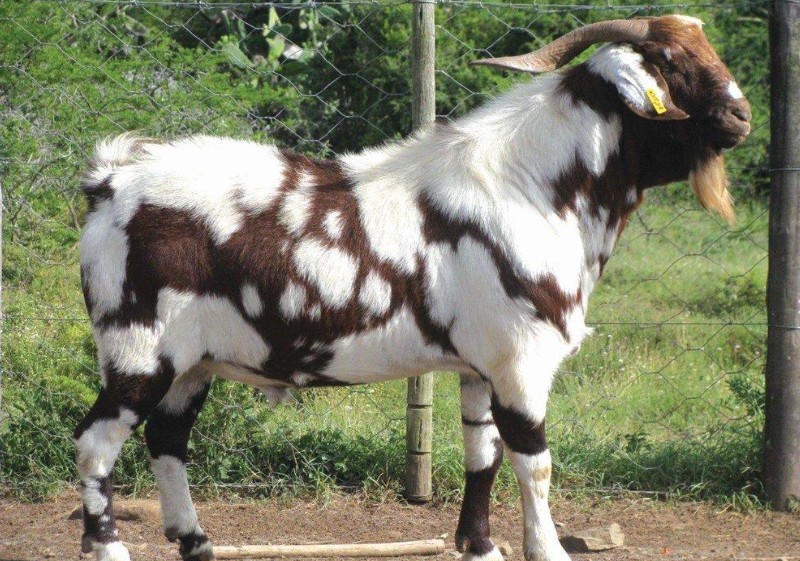
Our Indigenous veld goats run in a mixed herd including Dorper sheep and Nguni Cattle. The goats are not brought home at night and are left in the veld to rear their kids in a natural evironment. Kriegerskraal Farm is holistically managed. We do not dip or dose our animals nor give supplementations. Our animals must survive in the veld naturally. A strict selection criteria towards good mothering abilities, hardiness and fertility is followed.